Best Practices for IP Warmup Strategy to Improve Email Deliverability
Improve email deliverability with a proven IP warmup strategy. Learn how to reduce bounces, build sender reputation, and land in inboxes with real-world techniq
Why IP Warmup Is Non-Negotiable for Deliverability
You just set up your new IP address for email campaigns. You’ve cleaned your list, double-checked your SPF, DKIM, and DMARC, and you’re ready to send 50,000 emails on Day 1. Then you check your reports: 30% of them bounced, and most of the rest landed in spam folders.
That’s not a fluke. It’s the result of skipping IP warmup. Sending high volume from a clean, unproven IP spikes red flags with Gmail, Yahoo, Outlook, and other major providers. They don’t care if your content is perfect—only if your sending behavior looks legitimate. A sudden surge in volume from a new IP is a classic sign of spam.
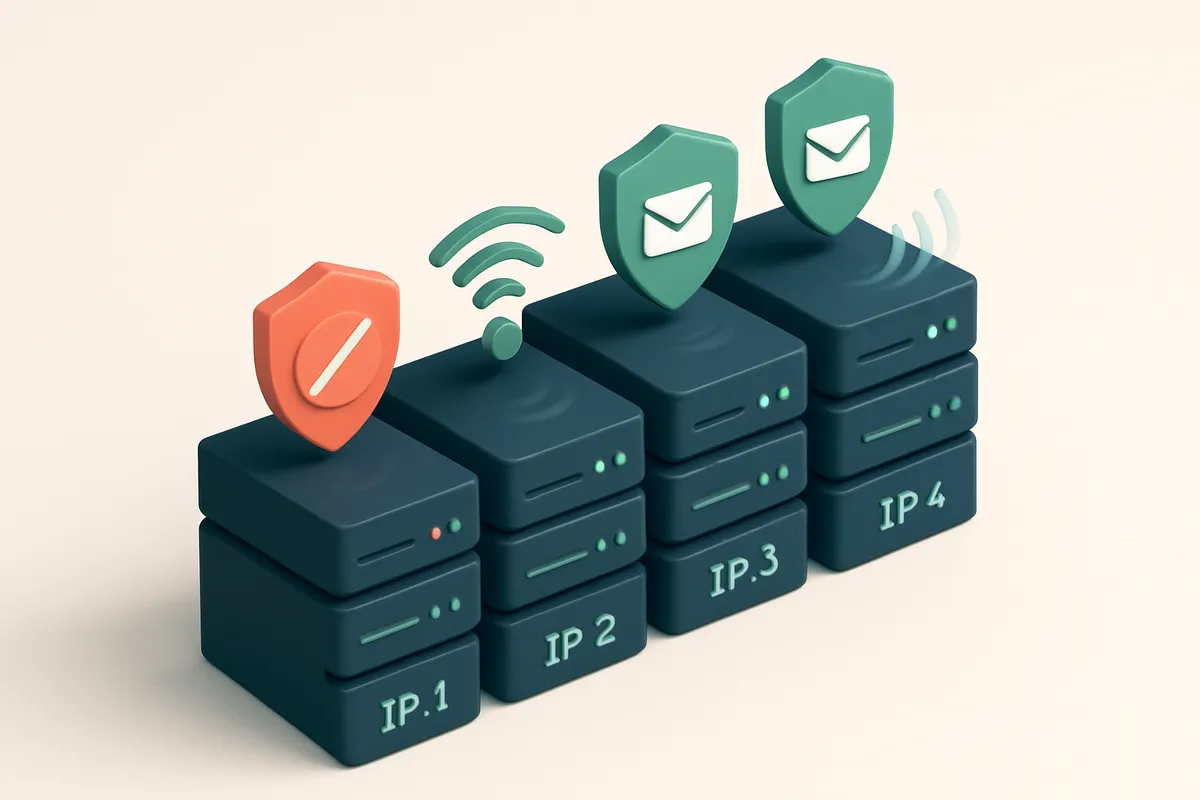
Warmup is the gradual process of building sender reputation by sending small volumes and increasing them over time. It signals to inbox providers that you’re a real sender with engaged recipients—not a bot or a compromised account.
You can’t force your way into inboxes. You have to earn trust. That’s why the best practices for IP warmup strategy to improve email deliverability start with consistency, not scale.
Key takeaways
- Major email providers use sending behavior—not just content—to assess sender legitimacy
- Jumping straight to high volume from a new IP triggers spam filters immediately
- A proper warmup strategy gradually increases sending volume to build reputation over time
The Core Mechanics of IP Warmup: How It Actually Works
You're launching a new IP address for email campaigns. The first step? Don’t blast 50,000 messages on day one. That’s a fast track to spam filters. Instead, you gradually increase volume over days or weeks. This is IP warmup — not a suggestion, but a necessity.
Why Volume Alone Doesn’t Build Reputation
Providers like Gmail and Yahoo don’t just look at how many emails you send. They track patterns: consistency, engagement, and who’s actually opening your messages. Sending a sudden flood from a cold IP signals high risk. It looks like spam, even if it’s not.
Think of it this way: you wouldn’t show up at a party with a loud speaker and start blasting music. You’d walk in, say hello, ease into the vibe. That’s exactly what IP warmup does — it simulates a real sender gradually building credibility.
Reputation is Built on Engagement, Not Just Volume
Each small step in volume — say, 100 emails on day one, then 500, then 2,000 — sends a signal: “We’re a real sender, and our subscribers care.” Engagement matters. High open rates, low spam complaints, and inbox placement all feed into your sender reputation.
Consistency is key. Sending 1,000 emails Monday, then none for a week, then 10,000 the next Monday? That’s irregular. Providers flag that. A slow, steady climb is what works.
It’s not just about volume. It’s about how the receiving provider sees you: predictable, engaged, and trusted. That’s how you earn a seat in the inbox.
And yes, the process is well-documented. The SMTP standard (RFC 7858) details how mail servers communicate, but reputation systems rely on behavioral signals — not just technical compliance. This is why warmup isn’t optional.
Before you start sending, verify your list. Invalid or risky addresses increase bounce rates and harm reputation. Use tools like MailTester’s bulk verification to clean your list before sending. A clean list, combined with a steady warmup, makes the process predictable.
Also, don’t assume every address is valid. Catch-alls, role accounts, disposable domains — they don’t count. Use real-time tools like MailTester’s API to validate as you go. No surprises later.
The goal isn’t speed. It’s sustainability. A solid IP warmup strategy reduces bounces, keeps you off blocklists, and improves inbox placement over time. It’s not flashy, but it’s reliable.
Let’s be honest: skipping warmup is like driving without checking the oil. You might get a few miles, but you’ll break down. Build the habit right from the start.
If you’re managing multiple lists or scaling campaigns, integrations with platforms like HubSpot or Klaviyo help automate verification and tracking. Use the data to refine your patterns — and keep your sender reputation intact.
Start with a Clean List: The Foundation of a Strong Warmup
Let’s be clear: no amount of warming up will fix a bad list. If your send list contains invalid, disposable, or role-based email addresses, your IP warmup starts with a foot in the ditch. You don’t warm up a car engine with a cracked radiator. Same applies here.
Filter out the noise before you send
Before you even begin sending to your new IP, scrub your list. Remove any address that’s not a real, individual inbox. Role addresses like admin@, support@, or sales@ are rarely engaged. Disposable domains (like mailinator.com or temp-mail.org) are temporary by design—they’ll never open your email and often trigger spam filters.
Many senders assume “valid” means “delivered,” but it doesn’t. A valid email address can still be a high-risk one—like an old address that no longer receives mail, or a spam trap buried in someone’s abandoned list. These aren’t just bounce risks—they’re red flags that harm sender reputation from the first send.
Use email verification as your first safety layer
Let’s cut to the point: you can’t warm up reliably if half your list bounces. A high bounce rate on day one is a fast track to being flagged by ISPs. Tools like MailTester’s bulk verification test your list at scale, catching invalid, risky, and catch-all addresses before they hit your inbox.
With 98.9% accuracy, MailTester identifies issues like outdated domains, role accounts, and disposable inboxes. It’s not magic—it’s just better than guessing. And since verification credits never expire, you’re not wasting money on unused capacity.
Think of email verification as your pre-flight checklist. You wouldn’t take off with a cracked windshield, and you shouldn’t send an email campaign with spam traps or dead addresses. The best IP warmup strategy begins not with sending, but with filtering.
For teams already using platforms like Mailchimp or HubSpot, MailTester’s native integrations make cleaning your list seamless. You don’t need to pull data manually—just verify it before every send.
Spamhaus and MxToolbox both note that list hygiene is one of the most consistent indicators of long-term deliverability health. It’s not just a best practice—it’s a foundation. If your list is clean, your warmup has a fighting chance.
Use MailTester to Verify Your List Before Warmup Begins
Let's be honest: warmup fails fast when you send to invalid or low-quality addresses. Before you even start warming up your IP, you need a clean list. That’s where MailTester comes in. It’s not about sending more emails—it’s about sending to the right ones.
Run a Bulk Verification Before You Warm Up
Start by uploading your list to MailTester’s bulk verification tool. This takes minutes, even for 10,000+ emails. You’ll get a report with clear verdicts: valid, invalid, catch-all, or risky. No guesswork.
- Upload your list to MailTester. Use the dashboard or integrate via the real-time verification API for automated checks on real-time data. This step is foundational—clean inputs lead to better outcomes.
- Filter out invalid, catch-all, and risky emails. Invalid addresses bounce immediately. Catch-alls accept any email, so they hurt engagement metrics and hurt sender reputation. Risky emails have a history of being abused or unverified—sending to them can trigger spam filters.
- Remove these addresses before warmup. You’re not just reducing bounces—you’re protecting your domain’s reputation. According to [Spamhaus](https://www.spamhaus.org), even a small number of hard bounces can signal poor list hygiene and lead to IP blacklisting.
- Focus warmup on real, engaged recipients. Only send to verified, valid addresses. This keeps engagement rates high from day one, which signals to inboxes that your emails are wanted.
Why 98.9% Accuracy Matters
MailTester’s 98.9% accuracy rate isn’t a marketing gimmick—it’s a measurable outcome of checking against real-time SMTP, MX, DNS, and role account checks. That means you’re not just removing obvious invalids. You’re catching hidden risks: disposable domains, role accounts (like info@ or support@), and systems that accept any email without verification.
These are the exact types of addresses that lead to high bounce rates, low engagement, and inbox placement issues. For example, a 2023 report from Return Path found that lists with high disposable email usage were 3.4x more likely to be flagged by filters.
You don’t need to guess. Use MailTester’s inbox placement testing after warmup to validate deliverability. If you send to only validated addresses, your results will reflect genuine engagement—not just luck.
“List hygiene isn’t a one-time task. It’s the foundation of long-term deliverability.”
By catching risks early, you reduce waste and build sender trust faster. It’s a small step that prevents big problems later.
Set a Realistic Warmup Schedule Based on Your Send Volume
Let’s be clear: skipping IP warmup is a fast track to spam folders. Even with perfect content and flawless list hygiene, a sudden burst of emails from a new IP will trigger spam filters. The fix? A steady ramp-up.
Start Small, Scale Slowly
- Begin with 50–100 emails per day for the first 1–3 days. This gives receiving servers time to recognize your IP as trustworthy. Sending too much, too soon, signals high-risk behavior—exactly what spam filters look for.
- Increase your volume by 50–100 messages per day. This incremental growth is safer than doubling your daily send count. It mirrors how legitimate senders scale their volume in practice.
- Never increase by more than 10% daily. A 10% cap is a standard industry guideline. It ensures your sender reputation evolves in a predictable way. The goal isn’t speed—it’s consistency.
- Aim for 30 days to reach 10,000+ unique recipients. This is the typical ramp-up window for mid-to-large volume senders. Shorter schedules risk flagging; longer ones can delay your campaigns, so stick to the standard.
You’re not just moving numbers—you’re building trust. Each email sent during warmup trains the receiving server’s spam detection systems. A slow, steady pattern shows that your sending behavior is stable, not malicious.
Many senders overlook list quality as a warmup factor. But if your list contains high bounce rates or invalid addresses, even a gentle ramp-up can backfire. That’s why starting with clean data matters.
Use a bulk verification service like MailTester’s bulk verification to remove invalid, role, or disposable addresses before you start. A clean list means fewer bounces, less stress on your warmup, and faster inbox placement.
Monitor While You Warm Up
Track delivery rates, open rates, and bounce rates daily. Even small drops in inbox placement could signal an issue with your warmup pace. Tools like MailTester’s inbox placement test show exactly where your emails land—spam, promotions, or inbox.
Spamhaus and MxToolbox offer real-time blocklist monitoring, which can help flag early signs of spam filtering. But nothing replaces consistent, predictable sending patterns.
The goal isn’t to rush to full capacity. It’s to avoid triggering systems that see sudden volume bursts as suspicious. A 30-day warmup isn’t a luxury—it’s a requirement with modern email providers.
Monitor Engagement Signals — They Are the Real Metric
Let’s be clear: email providers don’t care about your deliverability because you sent 10,000 messages. They care because people opened them, read them, and didn’t mark them as spam.
Open Rates and Unsubscribe Trends Tell the Real Story
Your first 10 days set the tone. If open rates stay above 15% and unsubscribe rates remain low—say, under 0.5%—you’re signaling to ISPs that your emails are welcome. That’s the kind of behavior that builds sender reputation.
If opens drop below 15% early on, that’s a red flag. It suggests either your list is stale, your content isn’t relevant, or you’ve hit a spike in spam traps. That’s when you need to pause and reevaluate. You might be wasting bandwidth on a list that no longer engages.
Providers like Gmail and Outlook don’t rely solely on bounce rates. They track engagement signals—opens, clicks, replies, inboxes moved to. This is how they score your sender reputation. A single spam report can hurt you; consistent low engagement can sink you.
Engagement Is the Core of Reputation Scoring
Think of it like a credit score: past behavior matters more than past delivery. Even if you send perfectly clean messages, a pattern of low interaction will eventually result in filtering.
Use tools that can help you catch weak lists before you hit them. For example, bulk email verification removes invalid, risky, and placeholder addresses before they dilute your engagement metrics.
Also consider testing your message’s inbox placement. Inbox placement testing shows where your emails land—primary inbox, promotions tab, or spam. It reveals whether your content is landing where it should.
Remember: ISPs don’t penalize you for sending to a bad address. They penalize you for sending to people who don’t care. That’s why engagement is the real metric.
Data from Spamhaus and industry benchmarks consistently show that sender reputation is built on sustained engagement, not volume. A warm-up that ignores this becomes a risk, not a strategy.
Avoid Common IP Warmup Mistakes That Kill Deliverability
Let’s be blunt: skipping warmup isn’t a shortcut. It’s a fast track to blocklists. If you’re sending to your full list on day one, you’re not building trust—you’re screaming “spam” to ISPs.
Don’t Flood the Gate on Day One
- Never send a high volume of emails to a new IP address on day one. ISPs track sending behavior and flag sudden spikes. A sudden surge in volume signals automation, not legitimacy.
- Start with 50–100 recipients over 3–5 days. Scale slowly—by no more than 10–20% per day. This gives ISPs time to associate your IP with real engagement.
- If you send 10,000 emails on Day 1, your IP will likely end up flagged by Spamhaus or similar blocklists. It’s not a matter of “if,” but “when.”
Isolate New IPs — Don’t Share Them
You’re not helping yourself by mixing new IPs with old ones. If you’re using the same domain across multiple IPs, especially with long-term senders, you’re handing ISPs a broken signal.
- Always keep new IPs isolated. Use separate domains or dedicated subdomains for new sending IPs—never co-mingle sending behavior.
- Shared IPs (e.g., shared server environments) dilute reputation. If one sender sends spam, everyone suffers. That’s why reputation systems like SenderScore track IP reputation independently.
- Using non-unique domains or shared infrastructure? You’re relying on someone else’s behavior. If they’re low-engagement or have bad history, your clean list won’t matter.
- Check your domain’s DMARC record and ensure it’s properly set up. Misconfigured authentication makes it harder for ISPs to verify legitimacy, even if your IP is clean.
Deliverability isn’t just about email content. It’s about the signals your sending behavior sends—from the IP to the domain to the sender context.
You’d be surprised how often people skip the basics: cleaning their list before warmup. A single invalid or catch-all email can trigger a bounce storm and hurt your reputation.
Let’s be clear: warmup only works if your list is clean. Use a real-time verification service to catch invalid, role, and disposable emails before they get sent.
- Run your list through a bulk verification tool to remove risky or non-existent addresses. At MailTester, our tool achieves 98.9% accuracy—that means fewer bounces, less strain on your IP reputation.
- Use our bulk verification page to test your entire list pre-warmup, ensuring only valid addresses get sent to.
- For real-time workflows, integrate our verification API to validate emails as they’re collected.
Once warmed, maintain your reputation: send consistently, clean lists regularly, and monitor engagement. Warmup isn’t a one-time setup—it’s part of ongoing deliverability hygiene.
Leverage Verified Senders to Speed Warmup Safely
Let’s be honest: starting a new IP from zero is like dropping into a new city without a map. Most providers see fresh IPs as high-risk by default. But you don’t have to start from scratch.
Use a Trusted Third-Party Platform to Build Credibility
Start with a platform like SendGrid or Mailchimp. These services already have established IPs with proven reputations. They’re trusted by providers across the board, so your messages are more likely to land in inboxes right away.
By sending through a known, clean infrastructure, you’re letting the provider do the heavy lifting on reputation. Your sending behavior gets vetted by systems that understand what good looks like — no guessing.
Build Volume Slowly—Then Transition With Confidence
Once you're sending through a trusted platform, gradually increase volume over 2–4 weeks. Start with a few hundred emails per day, then scale up as the provider’s feedback shows you’re consistent and well-behaved.
Many providers use reputation signals like engagement, spam complaints, and bounce rates to determine whether to accept your messages. Sending consistently from a strong IP shows you’re not a spammer. It’s social proof your IP can eventually stand alone.
After a few weeks of healthy sending, you can begin transitioning to your own IP. The key is to keep your sending pattern consistent and not jump straight to high volume. A sudden spike will trigger red flags, even if your content is clean.
Before you go solo, verify your list quality. Invalid or dormant addresses hurt your sender reputation — regardless of the IP. Use MailTester’s bulk verification to filter out dead or risky addresses before they ever hit your inbox.
Once you’re confident your list is accurate and your sending is gentle, your new IP has a far better chance of being accepted. This is how top senders get into inboxes without setting off alarms.
Remember, warmup isn’t about speed. It’s about proving you belong. And the safest way to do that is by hitching your wagon to an established IP.
Why Testing Inbox Delivery Matters During Warmup
You can clean your list until it shines, but that doesn’t guarantee emails will land in the inbox. Verification tools help find invalid addresses, but they don’t tell you whether a valid email is landing in spam. Let’s be clear: a "valid" address isn’t the same as a deliverable one.
Real inbox testing confirms deliverability, not just validity
Running a list through a verification service might flag 98.9% as valid—but that doesn’t mean they’re seeing your message in the inbox. Some valid addresses end up in spam filters, especially during warmup. You’re not done once you know an email exists: you need to know if it’s seen. That’s where inbox placement testing comes in. With tools like MailTester’s inbox placement feature, you can send real test messages to actual inboxes across major providers (Gmail, Outlook, Yahoo, etc.) and see exactly where they land. It’s not just a "yes/no" check—it tells you if your sender reputation, message content, or sending rate is triggering filters early.
Test across warmup phases to catch filtering early
Warmup isn’t a one-size-fits-all process. You shouldn’t wait until phase 4 to check delivery. Test after each phase—starting with small batches of 50–100 emails per day, then ramping up. During day 1, you might get all inboxes. By day 8, you spot one email routed to spam. That’s your signal: adjust volume, content, or timing. This is where real data beats assumptions. The SPF, DKIM, and DMARC authentication you set up is important. But mail providers also evaluate engagement, reputation, and sending patterns. A sudden spike in volume—even from a clean list—can trigger rate-limiting or spam filtering, even if your IP is new and clean. Testing during each phase helps you spot these red flags early. If you're sending from a new IP or domain, your reputation is still building. You can’t rely on past performance. You need real-world validation. Some tools only tell you if the email address is real. Others claim to predict deliverability—but only by analyzing patterns. True inbox testing uses actual delivery to real inboxes across top providers. It’s the most honest signal you can get. You’ll find that even small changes—like swapping from “Offer” to “Update” in your subject line—can impact inbox placement. Testing during warmup helps you catch these shifts before they hurt your deliverability at scale. If you’re using tools like MailTester’s bulk verification or API to clean your list, pair it with inbox placement testing. That combination covers both validity and delivery. It’s not a luxury. It’s how you build a deliverability-safe warmup. Spamhaus and RFC 5322 both stress that successful email delivery depends not just on technical setup, but on how recipients and providers respond in practice—not just during setup, but over time.
Best Practices for Scaling Beyond the Warmup Phase
You’ve hit the plateau. That’s good. But don’t assume the hard work is over. The real test begins after warmup: maintaining trust with inbox providers. One misstep — like cutting volume too abruptly — can trigger red flags. Let’s talk about how to keep your sender reputation strong as you scale.
Send Consistently, Don’t Spike or Drop
After reaching your warmup plateau, keep sending volume steady. Inconsistent patterns — like sending 10,000 emails one week and 1,000 the next — send signals that your list might be compromised or your sending behavior suspicious. According to Return Path data, sudden volume drops are a red flag in inbox provider algorithms. You’re not trying to outsmart filters; you’re proving reliability. A stable sending pattern builds long-term sender reputation. Use your current volume as a baseline. If you need to scale, increase gradually — 10–15% per week — not overnight. The goal isn’t speed; it’s consistency.
Keep Your List Clean, Not Just Fresh
Even the best-compiled list decays. People change jobs, leave companies, or abandon email accounts. If your list has 30% outdated addresses, delivery rates will drop, and you’ll waste sends. You can’t rely solely on the initial warmup to solve this. Let’s be honest: list decay is inevitable. Every month, verify new additions to your list. Use automated tools to scrub for invalid or risky addresses before adding them to campaigns. The cost of sending to a bad address is not just a bounce — it’s the risk of losing access to inboxes. MailTester’s bulk verification and API help you spot dead or disposable domains before you send. You can verify thousands of emails in minutes, filter out catch-alls and role accounts, and keep your delivery rates high.
Watch for Hidden Threats in Your Data
Spam traps don't go away. They hide in outdated, never-used, or recycled email addresses. If you start seeing a spike in hard bounces or unexpected spam trap hits, you’re likely sending to compromised data. It’s not just one or two bad emails — it’s a sign that older segments of your list are now toxic. Monitor your bounce rates and spam trap reports. Tools like Spamhaus and MxToolbox can confirm if your IPs or domains appear on blocklists. But prevention is better than cleanup. The best defense? Regular list hygiene. Every month, remove inactive segments and verify new ones. Don’t wait for a campaign to fail before fixing your data. Even the strongest warmup strategy fails if you don’t maintain it. Scale responsibly. Send consistently. Keep your list clean. That’s how you stay in the inbox.
IP Warmup Is Not a One-Time Task — It’s Ongoing Reputation Management
Warmup isn’t a setup step you complete once and forget. Every change — a new IP, a new domain, or a shift in sending infrastructure — requires rebuilding trust with ISPs. Ignoring this resets your reputation and risks inbox placement from day one.
Verification isn’t a one-off cleanup. Use MailTester’s real-time API to keep your list clean as new leads enter. Invalid or risky emails hurt sender reputation over time, even if they don’t bounce immediately.
Deliverability isn’t earned in a week. It depends on consistent sending behavior, engagement patterns, and list hygiene across months. The best warmup strategy treats reputation as a living metric, not a static configuration.
Keep reading
- Sender reputation, IP warm-up and sending infrastructure (complete guide)
- Double Opt-In vs Single Opt-In for List Hygiene & Sender Reputation
- IP Reputation Check for Email Deliverability Explained
- Email Deliverability Guide: Shared IP vs Dedicated IP Pros and Cons
- Test Email Deliverability with Sender Reputation Scoring in monday.com
Ready to put this into practice? MailTester verifies emails with 98.9% accuracy — start with 100 free verifications.
Frequently asked questions
How long does IP warmup usually take?
Typical warmup takes 7 to 30 days, depending on list size and sending volume. A slower ramp-up reduces risk.
Can I skip IP warmup if I use a reputable email service provider?
No — even providers with strong reputations require some warmup if you’re sending to new segments or changing domains.
What happens if I skip IP warmup?
Your emails are likely to be marked as spam, blocked by major providers, or rejected outright by spam filters.
Does domain reputation matter during IP warmup?
Yes — a new domain without DMARC, SPF, and DKIM records is treated as high risk, even on a warm IP.
How often should I re-verify my list during warmup?
Verify new additions monthly. Run a full list check quarterly to eliminate outdated or risky addresses.
Can I warm up multiple IPs at once?
Not advisable. Each new IP requires its own warmup cycle. Overlapping IPs dilute reputation signals.
What’s the ideal daily increase during IP warmup?
No more than 50–100 emails per day, or 10% increase per day. Faster ramps increase spam filter risk.
Does email content affect IP warmup?
Indirectly — poor engagement (low opens, high unsubscribes) hurts sender reputation over time, even during warmup.
Do spam traps kill warmup progress?
Yes — hitting a spam trap immediately breaks reputation and can lead to IP blocklisting.
How do I know if warmup is working?
Monitor inbox placement, open rates, and bounce rates. Consistent inboxes and growing engagement indicate success.