How to Test Email Deliverability for Nonprofit Campaigns
Ensure your nonprofit campaigns reach inboxes with proven deliverability testing. Identify spam traps, invalid addresses, and sender reputation risks before sen
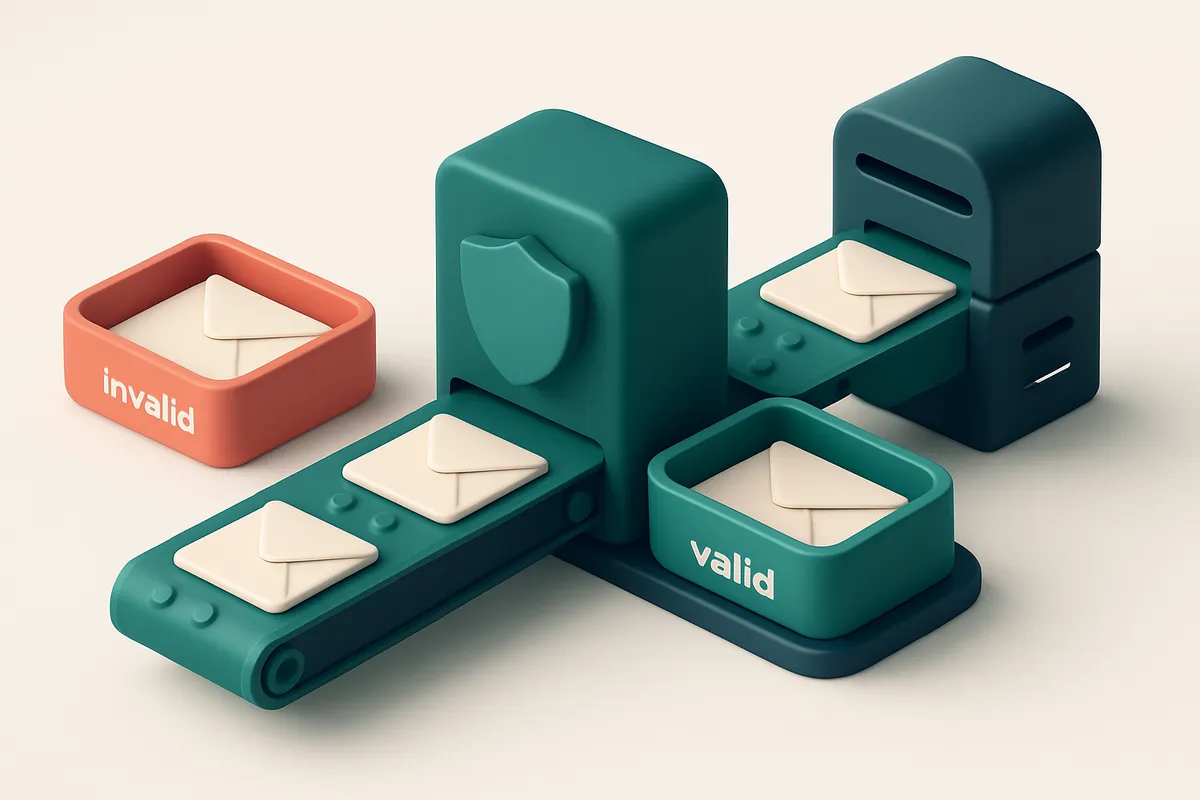
Why Deliverability Matters for Nonprofit Campaigns
You send a campaign to 10,000 supporters. Only 7,500 receive it. You don’t know why. Was it timing? Subject line? Or did the email vanish into a digital ghost town?
For nonprofits, inbox placement isn’t a technical detail—it’s the lifeline between a cause and a donor, a call to action and a volunteer signing up. Even a 1% drop in deliverability can mean hundreds of lost opportunities per send.
Spam filters don’t care if your mission is noble. They care about sender reputation, authentication, and consistency. A single misstep—like a bad email list, incorrect headers, or a shared IP—can push your entire domain onto a blocklist, affecting every future campaign.
Key takeaways
- Deliverability directly impacts your nonprofit’s ability to reach donors and volunteers.
- A 1% drop in inbox placement can cost hundreds of potential engagements per campaign.
- Spam filters penalize low sender reputation—regardless of intent or cause.
Your List May Be Full of Delivery Blockers
Let’s be honest: your nonprofit’s email list isn’t just a collection of contacts—it’s a delivery risk profile. Invalid addresses don’t just bounce. They signal to inbox providers that your sending behavior is unreliable. Every rejected message lowers your sender reputation, making it harder to reach real inboxes.
Outdated or Invalid Addresses Hurt Your Score
An email that looks valid but doesn’t exist—like [email protected] when the domain no longer hosts mail—is a hard bounce. ISPs track these patterns. Consistently sending to non-existent addresses gets flagged as poor list hygiene. It’s not just wasted sends; it’s a reputation penalty that affects all future campaigns.
Role Accounts Are a Red Flag
Mailing to @info, @contact, or @admin addresses? You’re not just targeting a person—you’re likely sending to a shared inbox or an automated filter. These are often treated as low-engagement or high-risk by filters at Gmail, Outlook, and other major providers. While technically valid, they don’t respond, so they don’t improve engagement metrics. In worst cases, they get silently suppressed.
Disposable Domains Are Blocked by Design
Domains like mailinator.com, tempmail.org, or guerrillamail.com are short-lived. They’re built for one-time use, usually to sign up for promotions. Most ISPs block them outright. Sending to them doesn’t just fail—it can drag down your sender reputation. You don’t want to be associated with temporary accounts.
Let’s not pretend this is a minor issue. According to RFC 5321, mail servers have the right to reject or delay messages based on the perceived trustworthiness of the sender and recipient. That includes addresses from disposable domains or non-responsive roles.
You can’t just test one message and assume everything’s fine. A single campaign with a high bounce rate—even from a few bad addresses—can trigger filters. If your list includes 2% invalid or risky emails, your deliverability drops faster than you’d expect.
Maintaining sender health isn’t a one-time fix. It’s an ongoing practice. That’s why tools like bulk verification exist—not to just check validity, but to spot hidden delivery risks before they cost you in inbox placement.
How Email Verification Preempts Deliverability Failures
Let’s be honest: no one wants to send a campaign only to watch it vanish into the void. You’ve written a compelling message, designed a clean template, and scheduled the send—then a bunch of hard bounces show up. That’s not just wasted effort. It’s a red flag to ISPs and can hurt your sender reputation. Before you hit send, clean your list. Not with assumptions. Not with guesswork. Use a trusted SaaS tool like MailTester to verify every address. It’s faster than manual checks and vastly more accurate.
Real-time checks mean real confidence
MailTester doesn’t just say “valid” or “invalid.” It runs live checks against DNS records, MX servers, and SMTP protocols in real time. It confirms whether an inbox still exists, if the domain is accepting mail, and whether the address is catching all incoming messages (a catch-all). That’s how you avoid sending to addresses that’ll fail silently or trigger spam filters. This isn’t theory. It’s how email deliverability works. According to RFC 5321, the standard for SMTP, the mail server determines delivery acceptance during the initial handshake. If an address isn’t properly resolved or is blocked, the response is immediate. MailTester simulates that process at scale.
Accuracy matters—especially for nonprofits
You’re running a campaign for a cause. Every email counts. You don’t need false positives, false negatives, or wasted sends. The 98.9% accuracy rate from MailTester means your list is cleaned with minimal error—no more chasing down half-baked assumptions. This level of precision doesn't just reduce bounces. It protects your reputation. Sending to invalid or risky addresses can hurt your domain score. ISPs monitor engagement and bounce rates. High bounce rates, especially from old or poorly maintained lists, are a top reason for inbox placement issues. Use the bulk verification tool to test large lists in minutes. Run real-time checks via the API for automated workflows. Or try the email finder to enrich your list with verified contacts. Bulk list verification and API verification integrate with tools like Mailchimp, HubSpot, and Klaviyo—no friction, no guesswork. And yes, your purchased credits never expire, so you're not rushed into spending. This isn’t about vanity metrics. It’s about making sure your message reaches the people who care. You’re not just cleaning a list. You’re building a foundation for trust, consistency, and results.
Deliverability isn't luck. It's built through clean data, valid infrastructure, and consistent sender behavior.
You’ve got a message worth sharing. Let the technology do what it’s meant to: deliver it.
Test Deliverability with Real Inbox Placement
You don’t get to assume your email lands in the inbox. Not even when you’ve done everything right. Many nonprofits learn the hard way that high open rates don’t guarantee inbox delivery—your message might be quietly filtered into spam or blocked entirely.
That’s why testing with real inboxes is essential. Instead of relying on guesswork or vague tools, you need to send actual test emails to real mailboxes across major providers. Let’s be clear: a “high deliverability score” from a dashboard means nothing if the message never reaches the user.
Send to Real Inboxes, Get Real Results
MailTester sends test messages to 15+ major email providers, including Gmail, Outlook, Yahoo Mail, Apple Mail, and ProtonMail. These aren’t simulations—they’re real email accounts with live filtering systems. The results reflect how your email would be treated in today’s complex spam landscape.
You get a clear verdict for each inbox: *delivered to inbox*, *marked as spam*, or *blocked entirely*. No ambiguity. No “maybe.” Just a straightforward report showing where your message actually lands, so you can fix problems before a campaign goes live.
Think of it like stress-testing your message under real-world conditions. A 2023 report from Return Path noted that nearly 50% of transactional emails still end up in spam folders—this isn’t uncommon, but it’s preventable with active testing.
Let’s say you’re sending a fundraising campaign. You run the inbox placement test. The result: Gmail says “inbox,” but Outlook flags it as spam. Now you know—before you send to hundreds—that a tweak to your subject line or header fields could make the difference.
Test Before You Send
Proactive testing isn’t a luxury. It’s a necessity. If you’re not checking deliverability before a campaign, you’re sending blind. That’s how campaigns get lost in spam, open rates drop, and donor engagement stalls.
Use MailTester’s inbox placement tool to simulate your real-world send. It’s fast, accurate, and built on real data from industry-standard systems. You can test individual emails or bulk lists—whatever fits your workflow.
With MailTester, every verified email is a candidate for delivery. And every test result you get gives you a clearer picture of what to expect. Test real inboxes. Get real answers.
Run your inbox placement test today—no sign-up required.
How to Test Email Deliverability Step by Step
Run a Full List Verification First
Start by uploading your nonprofit’s email list—any size, even thousands of addresses—to MailTester’s bulk verification tool. This catches invalid addresses, syntax errors, and risky domains before you send.
Let’s be clear: sending to invalid or disposable emails hurts your sender reputation. Tools like RFC 5321 define how mail servers validate addresses, and skipping this step means you’re guessing. MailTester checks for catch-all responses, role accounts (like info@ or contact@), and disposable domains—common red flags in nonprofit outreach.
- Upload your list via CSV or paste directly. It processes fast, even at scale.
- Run full verification—MailTester checks syntax, MX records, and domain health. You’ll get real verdicts: valid, invalid, catch-all, risky, or disposable.
- Filter the results. Remove anything marked as invalid or disposable. Keep only addresses confirmed to exist and be deliverable.
Test Real Inbox Placement
Now, send a test campaign to real inboxes using MailTester’s inbox-placement test. This mimics your actual campaign send and shows how providers like Gmail, Outlook, or Yahoo treat your message.
Real testing matters. According to industry data, over 30% of emails from nonprofits land in spam or are blocked, often due to poor sender reputation or misaligned content. You can’t fix what you can’t measure.
- Choose a sample—a subset of your cleaned list, preferably from varied domains (Gmail, Yahoo, corporate domains).
- Send a test message with your actual campaign content. Use your preferred ESP—Mailchimp, HubSpot, SendGrid—connected via MailTester’s integrations.
- Review delivery outcomes. You’ll see which domains delivered to inbox, spam, or were blocked entirely.
- Adjust your strategy based on the data. If Gmail shows high spam rates, review your subject line, content, or sending frequency.
Use this insight to refine your list, content, and timing. A single test can prevent dozens of failed sends. And because MailTester’s accuracy is 98.9%, you’re building on real data—not assumptions.
“Testing deliverability isn’t optional—it's how you avoid being ignored.”
Don’t let poor delivery drag down your cause. Test before you send, act on results, and send only when you know it will land where it should.
What Each Verification Verdict Means
When you run a nonprofit campaign, every email counts. Getting a bounce or landing in spam isn't just frustrating—it erodes your sender reputation. That’s why understanding what each verification result actually means is crucial.
Real-World Meaning of Verification Results
Here’s what each verdict from MailTester’s 98.9% accurate system truly indicates:
| Verdict | What It Means | Delivery Risk | Recommended Action |
|---|---|---|---|
| Valid | Email is confirmed deliverable. The mailbox exists and accepts messages. No immediate red flags. | Low | Send with confidence. These are your best prospects for engagement. |
| Invalid | Permanently undeliverable. Common causes: typo in address, non-existent domain, or syntax error. | High | Remove immediately. Sending to invalid addresses harms deliverability and violates CAN-SPAM. |
| Catch-all | Domain accepts all email addresses—your message may technically be delivered, but engagement is unlikely. | Moderate to High | Use cautiously. These often appear in bulk lists, but lack personal intent. Monitor bounce rates closely. |
| Risky | May be a role account (like info@), disposable address, or high-bounce probability. Often flagged by filters. | High | Exercise caution. Consider skipping or segmenting these for low-priority campaigns. |
While catch-all domains are technically "valid," they’re not useful for engagement—many are used for spam traps or automated signups. Role accounts (like admin@ or support@) are often ignored or auto-deleted. Disposable emails tend to be short-lived and unresponsive.
These distinctions matter because ISPs like Gmail and Outlook filter based on behavioral signals—bounces, opens, clicks. Sending to invalid, catch-all, or disposable addresses inflates your bounce rate and damages sender reputation. RFC 5321 defines how SMTP servers validate mail delivery, and while it doesn’t cover behavioral metrics, it sets the foundation for what’s technically possible.
Let’s be clear: no tool eliminates all risk. But a clear, accurate verdict system—like the one MailTester uses—lets you act on data, not guesses.
If you’re managing a large list, use bulk verification to clean your database before a campaign. For automated workflows, integrate our real-time API to validate emails at signup. And always run inbox-placement tests to see how your message lands across major providers.
Integrate Delivery Testing into Your Workflow
Pre-Verify Lists Before Every Campaign
Let’s be honest: sending to a list full of invalid or dormant addresses does nothing but hurt your sender reputation. The fix? Integrate MailTester with your email platform to clean lists before every send.
- Sync your Mailchimp, Klaviyo, or HubSpot audience with MailTester’s integrations to run a bulk verification before your campaign launch.
- Use the bulk verification tool to test thousands of addresses in minutes, filtering out invalid, role-based, and catch-all emails.
- Eliminate bounce risks before they happen—especially critical for nonprofits running donation campaigns where every email counts.
Validate at the Point of Entry
Garbage in, garbage out. If you’re collecting emails on a form or landing page, make sure you’re not adding dead ends to your list.
- Implement the real-time verification API to validate addresses as users sign up.
- Block disposable domains and common role accounts (e.g., admin@, info@) before they enter your database.
- Use this layer to catch typos early—like a misspelled
[email protected]—and prompt correction without friction.
Studies show that sender reputation drops significantly when bounce rates exceed 2%. Since ISPs track delivery performance over time, even small spikes in invalid sends can flag your domain. Tools like RFC 5321 define SMTP behavior standards used by ISPs to assess send quality—accuracy matters.
Automate verification before every campaign. You won’t get higher inbox placement by guessing. You’ll get it by testing.
“Clean lists aren’t just a best practice—they’re a necessity for consistent inbox delivery.”
With MailTester, you can maintain list health without interrupting your workflow. Try the free tier to see how your list performs before sending.
Why Sender Reputation Is Non-Negotiable for Nonprofits
Let’s be honest: nonprofits depend on trust. When you send an email, you’re asking people to believe in your mission. If your messages land in spam folders—or worse, get blocked altogether—it’s not just a technical failure. It’s a reputational one.
Spam traps and bounce rates silently damage your standing
Every email you send contributes to your sender reputation. That’s a score built over time by ISPs based on how their recipients interact with your messages. High bounce rates? That’s a red flag. Sending to old or invalid addresses? Also a red flag. And spam traps—forgotten email addresses intentionally used to catch misbehaving senders? Even one message to one can trigger filters.
Spam traps don’t just ignore your email. They actively harm your reputation. A single message to a trap may not cause immediate failure, but it weakens your standing. This erosion accumulates. Over time, even a well-meaning campaign can be flagged or blocked.
You can catch the damage before it compounds
Deliverability tests aren’t just a nice-to-have. They’re your early warning system. They show you where your list is broken—where addresses are invalid, where mail is being caught in spam filters, or where your domain or IP is showing signs of abuse.
With tools like inbox placement testing, you can simulate how real ISPs treat your message before you send to thousands. You’ll see exactly where your campaign might fail—whether in Gmail, Yahoo, or Outlook—so you can fix it before reputation takes a hit.
Let’s put it this way: you don’t wait to check a car’s brakes when you’re already in a wreck. The same goes for email deliverability. Proactive checks help you avoid blacklisting by services like Spamhaus (Spamhaus) or MXToolbox, which track sender behavior based on consistent sending patterns.
Even a 0.5% bounce rate can signal list decay. A few invalid addresses today can become spam traps tomorrow. Real-time verification, like the kind offered in bulk verification or the real-time API, helps you spot the weak links *before* they harm your reputation.
Good intent isn’t enough. In the world of email, it’s the consistency of your sending behavior that matters. And that means keeping your list clean, your authentication tight, and your deliverability monitored. Don’t wait for the first blacklisting. Catch the risks early, fix them fast, and keep your mission moving forward—without getting stuck in spam.
You Can’t Rely on Free Tools or Guesswork
You can’t tell if an email address will land in the inbox just by checking its syntax. Free tools often stop at basic format validation—no real-time SMTP checks, no insights into sender reputation, and no way to test whether your message actually arrives in a real user’s inbox. Let’s be clear: a free checker doesn’t tell you if your nonprofit’s donation request gets flagged as spam, ignored, or filtered into a promotional tab. It can’t simulate how major providers like Gmail, Outlook, or Yahoo treat your email. That’s why so many campaigns start with strong subject lines but end with zero opens.
Real Deliverability Testing Requires Real Infrastructure
Tools like ZeroBounce or NeverBounce offer bulk validation, but their scope is limited. They test for syntax, format, and basic SMTP responses—useful, but incomplete. To understand real inbox placement, you need to send test emails through actual email provider inboxes and measure where they land. Only MailTester includes inbox placement testing across 15+ email providers, including Gmail, Outlook, Apple Mail, and others. You send a real test email through your sending infrastructure, and we track its path: inbox, spam folder, or blocked. This gives you measurable insight into how your message performs in practice.
Trust, But Verify
You can’t assume your email lands in the inbox just because the sender says it’s clean. Even with proper authentication (SPF, DKIM, DMARC), a high-volume send from an under-reputable domain might still face filtering. Bounce rates above 2% are common in outreach campaigns, but that doesn’t mean you should accept it. A 2023 study by Return Path (now Validity) found that 21% of marketing emails never reach the inbox—some due to reputation, some due to content, and some due to outdated addresses. Without testing, you’re shooting in the dark. Use the inbox placement tool at MailTester to simulate your actual send. Test your subject lines, from address, and list hygiene before your campaign goes live. A single test can save days of wasted effort. Whether you’re testing individual emails or verifying 10,000 addresses in bulk, bulk verification gives you real-time results with 98.9% accuracy. Or integrate our API for automated validation in your CRM or email platform. Don’t rely on guesswork. Let real delivery data guide your nonprofit’s outreach.
Start Testing Deliverability Today—No Risk
Let’s get real: your nonprofit’s mission matters. But if emails aren’t landing in inboxes, your message doesn’t get through. That’s why testing deliverability should be part of your campaign prep — not an afterthought.
Test Without Spending a Penny
- Start with 100 free verifications—no credit card, no commitment. Use them to clean your list before launch.
- Even if you test just five emails, you’ll catch invalid addresses, catch-alls, and disposable domains before they damage your sender reputation.
- Delivery issues often start with poor list hygiene. Fixing them early means higher inbox placement, especially during peak campaign seasons.
- Use MailTester’s bulk verification to screen hundreds of addresses in minutes, not hours.
Test at Your Own Pace
- Purchased credits never expire. No pressure. Run tests when you’re ready—don’t let urgency dictate timing.
- Deliverability isn’t a one-time fix. Use tests before every major campaign to maintain sender reputation. According to Return Path’s email deliverability studies, even small list issues can reduce inbox placement by 15% or more.
- For ongoing campaigns, integrate MailTester’s real-time verification API to validate new signups on the fly.
- Don’t guess what’s hurting your deliverability. Let MailTester’s inbox-placement tests show you exactly where your emails land—spam, promotions, or inbox.
- Use the in-app AI assistant to interpret results and get clear, actionable steps: “You’re failing SPF checks,” or “Your domain needs a DMARC record.” No guesswork.
Deliverability isn’t about luck. It’s about consistency, hygiene, and preparation.
Whether you’re running a donor drive, a volunteer signup, or a grant update, start with verification. Use MailTester’s email finder to fill gaps in your list, then test every batch before sending.
With integrations available for Mailchimp, HubSpot, Klaviyo, and SendGrid, getting started takes minutes. And if you ever need help, the integration hub shows exact setup steps.
Test today. No risk. Only clarity.
Final Thoughts: Deliverability Is Part of Your Mission
If your message doesn’t reach the inbox, your mission doesn’t get heard. No matter how compelling your cause, it’s invisible if it never lands in a subscriber’s view.
Test deliverability before every campaign. It protects your sender reputation and ensures your content reaches the right people at the right time.
Use verified, tested, and deliverable email lists to build long-term donor relationships grounded in trust and consistent communication.
Keep reading
- How to test email deliverability, spam score and rendering (complete guide)
- Email Verification API for SaaS Businesses with Deliverability Insights
- Deliverability Testing for Email Sequences in Consulting Firms
- Email Deliverability Testing for Retail Seasonal Campaign Emails
- Email Deliverability Insights for HR Talent Acquisition in 2026
Ready to put this into practice? MailTester verifies emails with 98.9% accuracy — start with 100 free verifications.
Frequently asked questions
How often should nonprofits test email deliverability?
Test every time you send a major campaign or update your list. A monthly check is ideal for maintaining reputation and catching new risks.
Can I test deliverability without sending to real email addresses?
Yes—MailTester conducts inbox placement tests using controlled, monitored inboxes without exposing real users.
What’s the difference between email verification and deliverability testing?
Verification checks if an address is valid. Deliverability testing confirms whether that address will reach the inbox or be blocked.
Do disposable email addresses hurt my sender reputation?
Yes—disposable domains often signal low engagement. Sending to them can trigger filters and degrade reputation over time.
How does MailTester check for role accounts?
It identifies common role-based addresses like @info, @contact, or @admin and flags them as risky to deliverability.
Can I integrate MailTester with my email service provider?
Yes—MailTester integrates directly with Mailchimp, HubSpot, Klaviyo, and SendGrid to verify lists before sending.
What happens if my domain gets blacklisted?
Your emails may be blocked entirely. Testing deliverability helps detect early warning signs before blacklisting occurs.
Is there a free way to test deliverability?
Some tools offer free checks but lack inbox placement testing. MailTester gives 100 free verifications, but full inbox testing requires credits.
Why does sender reputation matter for nonprofits?
Nonprofits often use emotional messaging that can trigger spam filters. A strong reputation ensures messages reach inboxes, not junk folders.
What is a ‘catch-all’ email address and why is it risky?
A catch-all accepts any email for a domain, even invalid ones. They're often used by spammers, so sending to them harms reputation.
How can I improve my nonprofit’s email deliverability score?
Remove invalid, role, and disposable emails, fix list hygiene, use proper authentication (SPF/DKIM/DMARC), and test deliverability before sending.
Can I use MailTester on thousands of emails at once?
Yes—MailTester supports bulk verification with no practical limit, ideal for large nonprofit donor or volunteer lists.